You can lift a heavy weight, move a weight quickly, or perform repeated movements without tiring as quickly. These might look like similar gym activities, but they train different physical qualities.
Understanding strength vs. power vs. endurance helps you understand what your workout is designed to improve and why your coach might program different exercises, loads, and repetitions.
What Is Strength?
Strength is your ability to produce force against resistance.
Think about lifting a heavy box, carrying groceries, or pushing a loaded sled. In the gym, strength training often involves challenging resistance with controlled repetitions.
If your goal is to lift heavier weights or make everyday tasks feel easier, developing strength is valuable.
Training for strength typically emphasizes relatively heavy loads, good technique, and adequate rest between sets.
What Is Power?
Power is your ability to produce force quickly.
Imagine jumping to catch a ball, quickly standing up from a chair, or accelerating into a sprint. These actions require more than strength alone. They require you to produce force rapidly.
In the gym, power training might include medicine ball throws, jumps, or appropriately coached weightlifting movements.
The American College of Sports Medicine’s 2026 position stand highlights moderate loads and intentionally fast lifting movements as useful approaches for developing power. Exercises must still match your experience and ability.
What Is Muscular Endurance?
Muscular endurance is your ability to sustain or repeat muscular effort.
Think about carrying several bags from the car, climbing multiple flights of stairs, or completing repeated bodyweight squats.
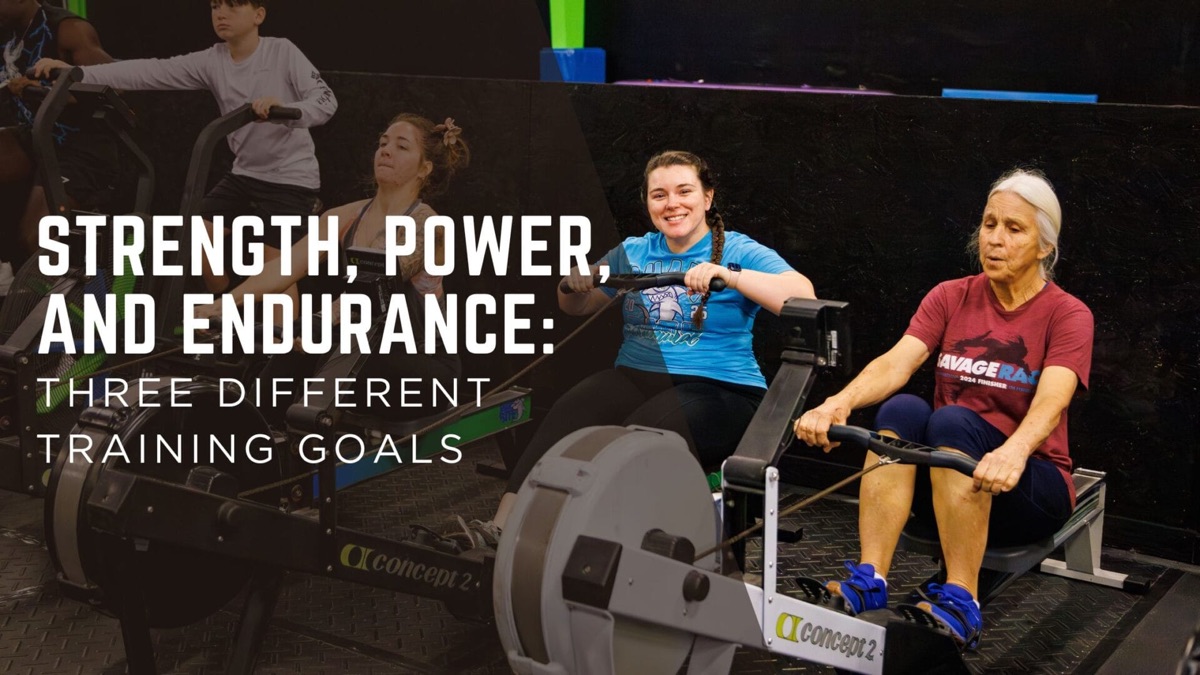
In the gym, muscular endurance might be developed through repeated sets, circuits, or exercises performed for more repetitions with manageable resistance.
The aim is to improve your ability to keep working without tiring as quickly.
How Does Training Differ?
Although the same exercise can develop several qualities, the training approach changes the emphasis.
Strength: Generally uses heavier loads and controlled repetitions.
Power: Emphasizes producing force quickly while maintaining movement quality.
Muscular endurance: Often involves repeated efforts or higher-repetition sets.
These are general approaches, not strict rules. Your results also depend on training volume, experience, exercise selection, and how consistently you train.
Do You Need to Train All Three?
That depends on your goals.
If you want to lift heavier objects, strength may be a priority. If you want to improve your ability to move quickly, power deserves attention. If you want to sustain physical activity longer, endurance matters.
Most adults benefit from a balanced program, but every person doesn’t need to prioritize all three equally.
or change anything from the above
The 2026 ACSM position stand reviewed 137 systematic reviews involving more than 30,000 participants. It found that resistance training can improve strength, power, muscular endurance, and several measures of physical function. The appropriate training approach depends on the outcome you’re targeting. https://pubmed.ncbi.nlm.nih.gov/41843416/
Train for What Matters to You
Your fitness program should have a purpose beyond making you tired.
At Shark Bite Fitness, we help adults build strength, conditioning, and physical confidence through structured coaching that fits their goals and abilities.
Whether you want to lift more, move faster, or have more energy for everyday activities, the right plan starts with understanding what you’re working toward.
Book your Free No-Sweat Intro at Shark Bite Fitness today. Talk with a coach about your goals and find out how to train for the qualities that matter most to your life.
Build strength. Develop power. Improve endurance. Train with purpose.