
You went in for bloodwork, and your doctor told you your blood sugar is running higher than it should be. Maybe they used the word prediabetes. Then they said to eat better and exercise more, and the appointment was over.
If that's you, you're in a big group. The CDC says about 8 in 10 adults who have prediabetes don't know they have it. You know, so you can do something about it.
"Exercise more" isn't much of a plan, though, so this is what we'd tell you.
Why strength training helps
Your muscles are one of the main places your body sends the sugar in your blood. When a muscle works, it pulls sugar in to use as fuel. The more muscle you have and the more often you use it, the more of that sugar has somewhere to go.
That's why the American Diabetes Association tells people with diabetes to strength train two or three days a week, along with walking or other cardio. Most people hear the cardio half and don't hear much about the strength half.
It's one more thing working for you, next to whatever your doctor has you doing.
What that looks like in a week
Two strength sessions a week is a good place to start. You don't need a long list of exercises. Sitting down to a box and standing back up, picking something up off the floor, pushing, pulling, and carrying something heavy across the gym will cover most of it.
Start light enough that it feels almost too easy, and add a little weight when it does. Building slowly like that is what makes it something you can keep doing.
On the other days, walk. Ten or fifteen minutes after dinner counts.
Before you start
Talk to your doctor, and tell them you want to start strength training. If you take anything for your blood sugar, ask if there's anything you should do differently around a workout.
Then tell your coach ALL of it. A good coach wants to know about the bloodwork, the medication, the bad knee and how long it's been since you were in a gym.
Where we come in
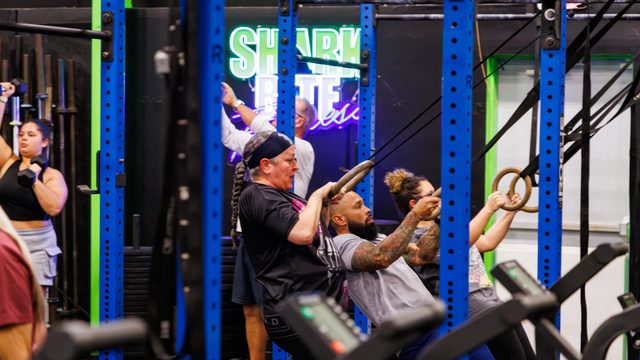
We're Shark Bite Fitness in Cape Coral, and every session here is coached. Private training is 1-on-1 or semi-private with up to four people, and the plan is built for you. We also have coached group classes.
Our coaches aren't doctors, and we won't give you medical advice. We coach the strength training, and we offer nutrition coaching if you want help with the food side.
If your provider writes you a Letter of Medical Necessity, your HSA or FSA can usually cover training here. Our pricing page explains how.
If you want to talk it through, book a free intro and tell us what's going on.